


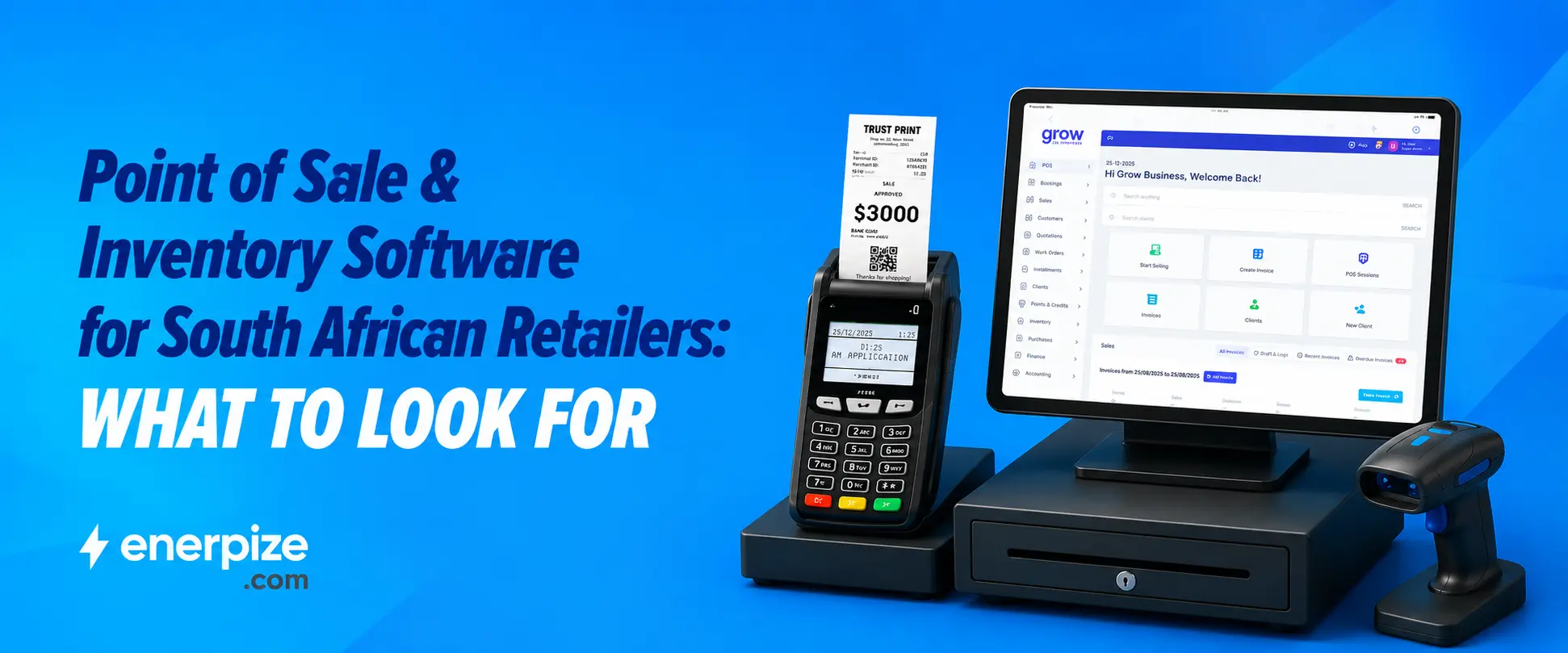
Point of Sale & Inventory Software for South African Retailers: What to Look For


Key Takeaways
- South Africa has gone over 300 consecutive days without scheduled load shedding, but unplanned outages and localized load reduction still happen, so offline POS capability still matters.
- From 1 April 2026, the compulsory VAT registration threshold rose from R1 million to R2.3 million, the first change to this threshold in seventeen years.
- Standalone card machines like Yoco and iKhokha handle payments well but do not track inventory, which means a separate reconciliation job every single day.
- SARS requires a full tax invoice for any transaction over R5,000, with clear rules for what must appear on it.
- Enerpize connects POS, inventory, and accounting in one system, starting from $9.99 a month, with a 14-day free trial and no credit card required.
Walk into any retail store in Johannesburg, Cape Town, or Durban and ask the owner what keeps them up at night. It is rarely the sales themselves. It is the gap between what the till says sold and what the storeroom actually has left. That gap is where most South African retailers lose money quietly, month after month, without ever seeing it on a single report.
Here is the part most guides get wrong. They treat point of sale and inventory as two separate purchases. Pick a card machine here, bolt on a spreadsheet there, maybe add a stock app if things get bad enough. That approach worked when a shop had one till and one shelf. It does not work anymore, and finding the best point of sale systems South Africa retailers can actually build a business on means treating the till and the stockroom as one decision from day one.
This guide walks through what a pos system for small business in South Africa actually needs to do, why buying POS and inventory separately costs more than it looks like on paper, what has changed with SARS and VAT rules in 2026, and how to compare your real options.
Stop reconciling your till against a spreadsheet every night. See how Enerpize connects your sales, stock, and accounts in one system. Start for Free
What a POS System Actually Needs to Do for a South African Retailer
A point of sale software for small business in this market has to do more than ring up a sale. It has to survive the conditions this country actually runs on.
Selling In-Store and Online From One System
Most South African retailers are not choosing between physical and online sales anymore. They are running both, often from the same stock. A customer buys a jacket in-store on Saturday, another buys the same jacket online on Sunday, and if your system does not update both channels from one shared stock count, you will oversell something eventually. Enerpize handles both online and in-store sales from the same product catalog, so a sale on one channel updates stock everywhere else instantly.
Staying Resilient Through Unplanned Outages, Not Just Scheduled Load Shedding
Here is something worth being precise about, because most articles on this topic are still stuck in 2023. South Africa has now gone more than 300 consecutive days without scheduled load shedding, and Eskom has projected a stable winter through 2026. That is genuine, measurable progress, and it deserves to be said plainly rather than buried under old fear language.
But that does not mean the power is guaranteed. Unplanned outages still happen. Localized load reduction, a separate and more targeted practice used to protect overloaded infrastructure in specific areas, is still active in parts of the country. So the real question for a retailer buying a cloud based point of sale system is not "will load shedding hit me today." It is "what happens to my till and my stock count if the power drops for two hours with no warning." A system that only works with a live internet connection fails you exactly when you need it most. Enerpize POS runs in full offline mode, recording every sale without interruption, and syncs automatically the second the connection returns. Nothing gets lost in the gap.
Talking to Your Stock in Real Time
A stock control system for small business only earns its keep if it updates the moment a sale happens, not at closing time when someone remembers to type it in. Barcode scanning, live stock counts across every till, and instant visibility into what is actually on the shelf versus what the system thinks is on the shelf. That is the baseline, not a premium feature.
Why Standalone POS and Inventory Software Cost You More Long-Term
This is the part that never gets said plainly enough. A card machine from Yoco or iKhokha is genuinely good at what it does. Fast checkout, reliable payments, simple setup. But a card machine is not pos and inventory software. It processes the transaction and stops there. Your stock count still lives somewhere else, usually in a spreadsheet someone updates when they remember to.
That gap is where the real cost sits. Every time your till and your stock system are separate, someone has to manually reconcile them. That is paid time spent matching numbers instead of serving customers. It is also where errors creep in silently. You think you have twelve units of something and you actually have four, because the sale never made it from the card machine into the stock count.
Inventory management software South Africa retailers rely on separately from their POS creates exactly this problem. Two systems, two sources of truth, and a reconciliation job nobody enjoys doing. When your POS and your stock system are the same platform, that reconciliation job disappears because there was never a gap to close in the first place.
Best Point of Sale Systems in South Africa: What to Compare
There is no single right answer here. It depends on what stage your business is at. But the categories are worth knowing before you commit to one.
Card-Machine-First Providers
Yoco, iKhokha, and Adumo built their businesses on fast, affordable card payments, and they do that job well, particularly for a single till taking walk-in payments. Where they fall short is anything beyond the transaction itself. No native inventory tracking, no accounting integration, no multi-branch stock visibility. If all you need is to take payment, these work. If you need to know what is in stock across two locations, you will end up buying something else alongside them anyway.
Integrated POS and Inventory Platforms
This is where POS software South Africa retailers running more than one till or more than one location tend to land, because the till, the stock count, and the books all update from the same transaction. No export, no manual entry, no end of day reconciliation. Enerpize is built this way. A sale rings up, stock adjusts, and the accounting entry generates itself, all from the same action.
Enterprise and Legacy Retail Systems
Larger retail chains with dedicated IT teams sometimes run legacy on-premise systems built for a different era of retail. These can work, but they usually come with real implementation timelines, hardware dependencies, and support contracts that a small or growing business does not need to take on.
See what a point of sale system built around inventory looks like in practice. Fourteen days free, every module included, no credit card needed. Start for Free
VAT, Tax Invoices, and the 2026 Threshold Change: What SARS Actually Requires
This is the section most competitor guides skip entirely, and it matters more this year than most.
From 1 April 2026, the compulsory VAT registration threshold in South Africa increased from R1 million to R2.3 million in annual taxable supplies. That is the first change to this threshold in seventeen years. If your business sits between the old and new threshold, you are no longer required to register, though you can still register voluntarily if it benefits your input tax position. The voluntary registration threshold also moved, from R50,000 to R120,000. The standard VAT rate stays at 15 percent.
For any retailer that is VAT registered, SARS has clear tiers for what a tax invoice needs to contain. A full tax invoice is required for any transaction over R5,000, and it must carry the words "Tax Invoice," the supplier's name, address, and VAT registration number, the recipient's details, a description of the goods, and the value, VAT amount, and total shown clearly. Transactions between R50 and R5,000 can use an abridged tax invoice, which does not need the recipient's details. Anything R50 or under does not require a formal tax invoice at all, though you still need a till slip if the buyer wants to claim input VAT on it. A pos and inventory software platform that generates these automatically, correctly formatted every time, removes an entire category of compliance risk that a standalone card machine simply was never built to handle.
There is a second layer worth mentioning here too. If your POS system stores customer details for loyalty programs or a CRM, that data falls under POPIA, South Africa's data protection law. POPIA requires you to be transparent about what customer data you collect and why, and penalties for mishandling it can run up to R10 million. A system that keeps customer records secure and gives you control over that data is not optional anymore. It is part of running a retail business here.
Multi-Branch and Multi-Warehouse: When One Till Isn't Enough
A single till works fine for a single shop. The moment you open a second location, everything gets harder without the right system underneath it. Which branch has stock. Which branch is short. Whether a transfer between stores actually happened or just got logged and forgotten.
A proper retail pos system built for multiple locations needs to show you stock across every branch from one dashboard, not five separate logins you have to check individually. Enerpize supports multi-branch and multi-warehouse operations natively, with sales, stock, and staff performance tracked per location and consolidated at the company level. That matters whether you are running two clothing stores in Cape Town or a supermarket chain with warehouses feeding multiple outlets.
How Enerpize Handles POS and Inventory Together
Real-Time Stock Sync Across Till and Warehouse
Every sale made on Enerpize's POS system updates stock instantly, whether that sale happened in-store, online, or through a mobile terminal. No batch updates, no end of day sync job. The number on the shelf and the number in the system are the same number, all the time.
Offline Billing That Syncs Automatically on Reconnect
This is the part that actually matters given everything covered above about outages. Enerpize POS keeps working without an internet connection, recording every sale locally, and the moment the connection returns, everything syncs automatically. No lost sales, no manual re-entry, no gap between what happened and what the system knows happened.
What This Looks Like for a Retailer Running Two or Three Branches
Picture a homeware retailer with a flagship store in Sandton and two smaller branches in Pretoria and Centurion. Under a fragmented setup, the owner is calling each branch manager at closing time to ask what sold and what is running low. With Enerpize, that same owner opens one dashboard and sees stock, sales, and staff performance across all three locations in real time. When Sandton runs low on a product that Centurion has extra of, that transfer gets logged and tracked instead of happening on a WhatsApp message that gets lost by Tuesday.
This is the same principle Enerpize applies across its retail store management software, where invoicing, stock control software, purchasing, and staff tracking run from a single system rather than four disconnected tools bolted together. For retailers who also sell online, the same stock and sales data flows straight into Enerpize's online store management tools, so a product sold on a website and a product sold at the counter are never tracked as two separate things.
Run your till, your stock, and your books from one place. Enerpize is free to try for 14 days, no credit card, no setup fees. Start for Free
FAQs
What is the best POS system for small businesses in South Africa?
The best point of sale systems South Africa small businesses should look at are the ones that connect payments, stock, and accounting in one platform rather than treating each as a separate purchase. Card-only providers like Yoco and iKhokha work well for simple payment processing, but a retailer managing stock across more than one till benefits from an integrated system like Enerpize, where sales, inventory, and accounting update together automatically.
Do I need separate POS and inventory software?
No, and running them separately usually costs more in the long run through manual reconciliation and stock errors. An inventory management software South Africa retailer runs alongside their POS creates two sources of truth that someone has to keep matching by hand. A combined system removes that gap entirely.
Do POS systems work during power outages?
The best ones do. South Africa has gone more than 300 days without scheduled load shedding as of this year, but unplanned outages and localized load reduction still happen. A cloud based point of sale system with proper offline mode, like Enerpize, keeps recording sales without an internet connection and syncs everything automatically once power and connectivity return.
Is Enerpize VAT-compliant for South African retailers?
Enerpize generates tax invoices structured around SARS requirements, including the full and abridged invoice tiers based on transaction value. With the VAT registration threshold now at R2.3 million as of April 2026, retailers can also track their taxable turnover in the same system they use to invoice, making it easier to know exactly where they stand against the threshold.
How much does POS and inventory software cost in South Africa?
Enerpize's plans start from $9.99 a month, with sales, POS, inventory, accounting, HR, and CRM included in every plan rather than gated behind higher tiers. A 14-day free trial is available with no credit card required, which is enough time to see how a pos system for small business actually performs against your real sales volume before committing to anything.
About the Author
Omar El Bahr is a Senior Digital Growth Specialist at Enerpize, where he leads SEO, content strategy, and organic growth across international markets. He is a Forbes Communications Council contributor and has written for Entrepreneur on business communication and digital strategy.
Disclaimer: This article is for general informational purposes and reflects South African VAT, POPIA, and load shedding facts accurate as of the time of writing. Tax and compliance requirements change. Confirm current thresholds and requirements directly with SARS or a registered tax practitioner before making business decisions.
Related Articles
 Sales
Sales
What is Invoice Management: A Comprehensive Guide
Read more Sales
Sales
Best Restaurant POS Systems And How To Choose One
Read more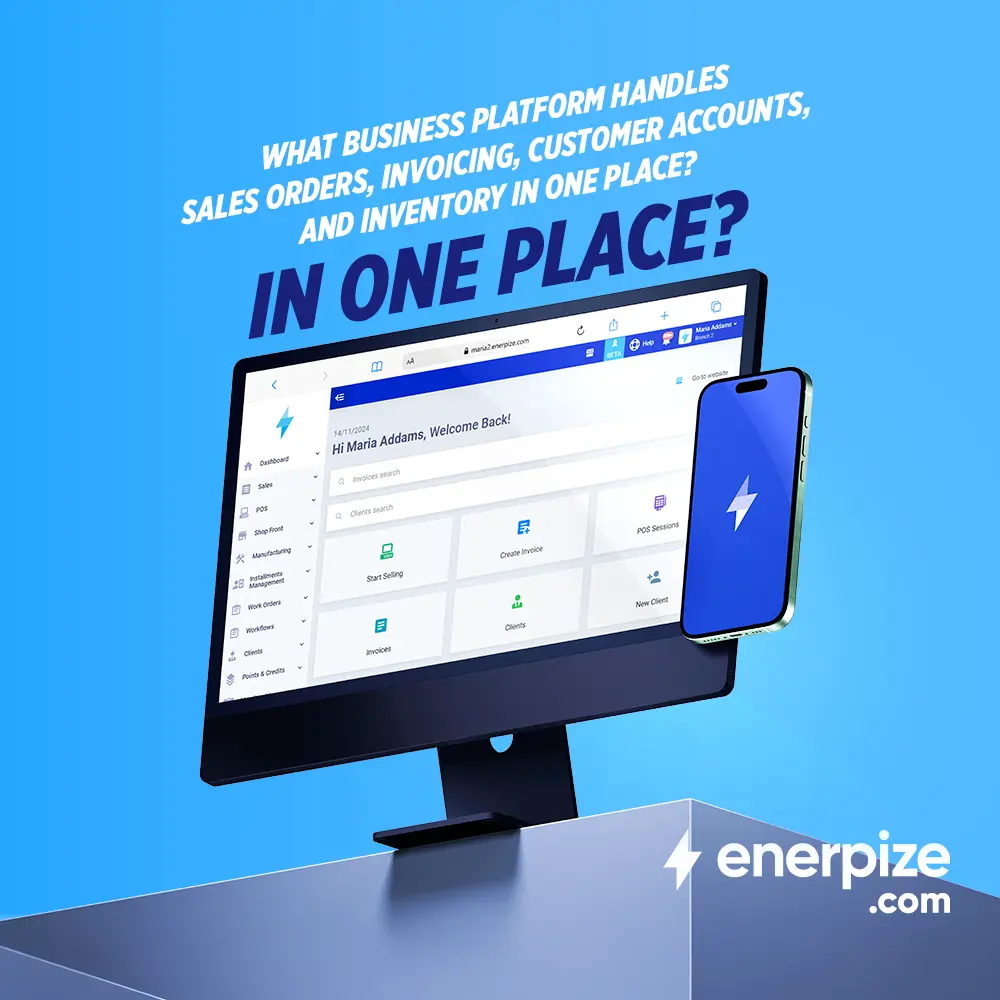 Sales
Sales
What Business Platform Handles Sales Orders, Invoicing, Customer Accounts, and Inventory in One Place?
Read more Sales
Sales
Pos Tracking: Definition and How to Do
Read more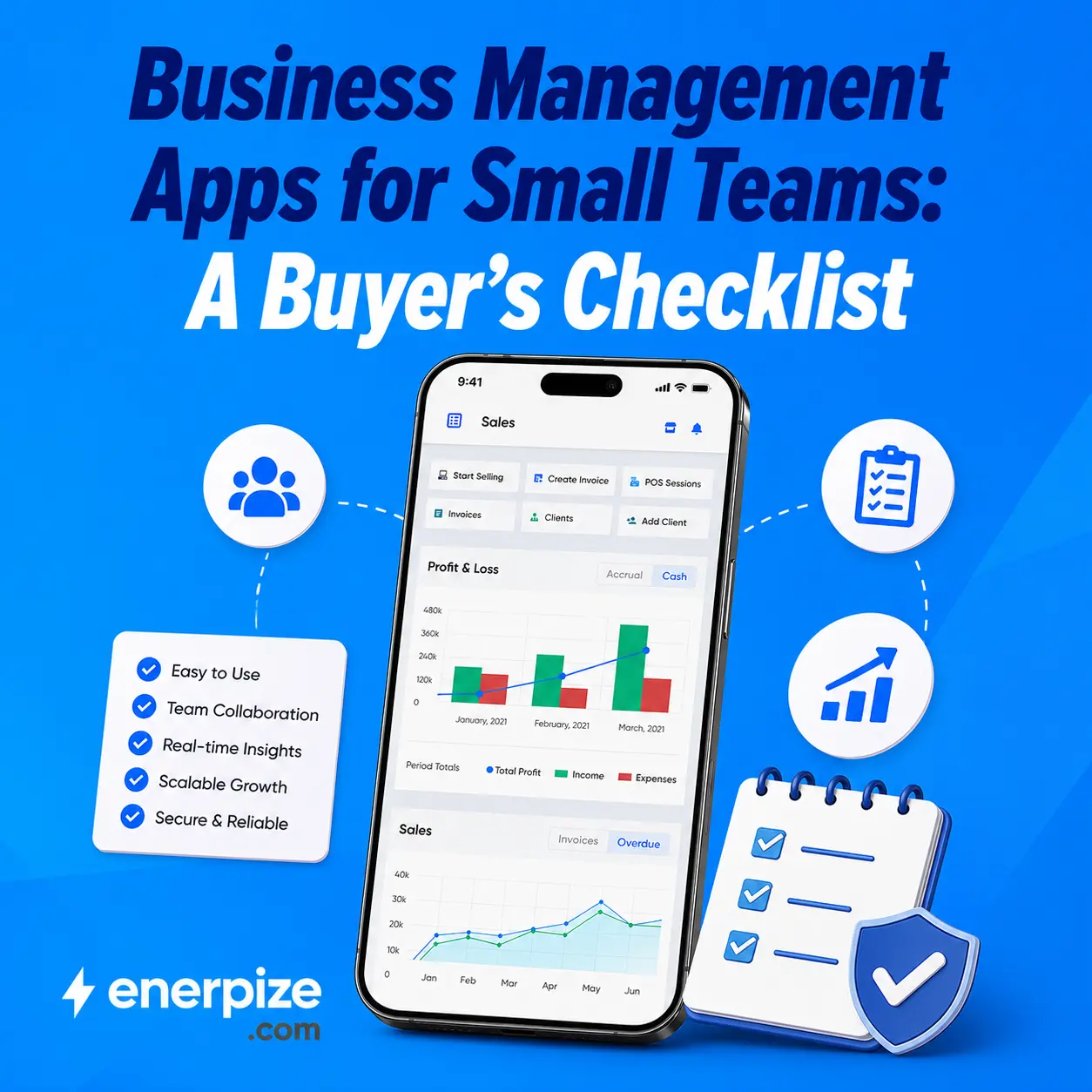 Sales
Sales
Small Businesses Management Apps: A Buyer's Checklist
Read more Sales
Sales