

Posted on 25 January 2026
Business Agreement Template Word & Google Docs
- The business agreement template is available in Word and Google Docs.
- It provides a clear, standardized structure for defining business relationships and obligations.
- Reduces legal risk by documenting scope, payment, confidentiality, and termination terms.
- Ensures both parties operate with shared expectations from the start of the engagement.


What is a Business Agreement Template?
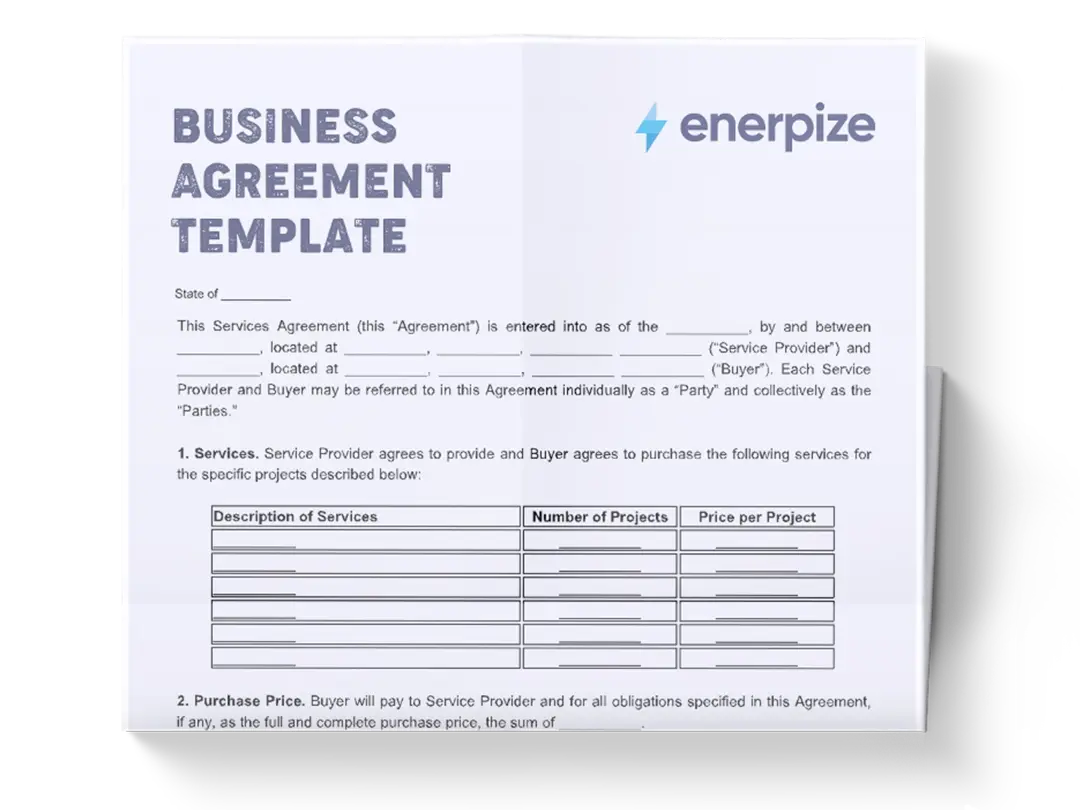
A business agreement template is a legal document designed to formally define the relationship between two parties engaging in a commercial arrangement.
The business agreement template translates verbal discussions and informal understandings into clear, written terms that specify who the parties are, what they have agreed to do, how long the agreement lasts, how payments are handled, and what happens if the relationship ends or disputes arise. Rather than relying on assumptions or fragmented email exchanges, this template establishes a single, authoritative reference point that governs responsibilities, confidentiality, intellectual property, liability, and legal jurisdiction.
It serves both as an operational guide during the relationship and as a legal safeguard if expectations are challenged, making it a foundational tool for professional, risk-aware business dealings.
What Does the Business Agreement Template Contain?
Effective Date and Parties Identification
Defines when the agreement becomes effective and clearly identifies Party A and Party B, including legal names, addresses, registration numbers (if applicable), and authorized representatives.
Purpose of the Agreement
States the reason for the agreement and briefly describes the nature of the business relationship or the services/products involved.
Scope of Work / Services
Lists the specific services or deliverables to be provided and allows reference to an attached schedule or statement of work if needed.
Term and Duration
Specifies the start and end dates of the agreement and establishes how long the relationship is intended to last.
Payment Terms
Details fees, pricing structure, payment schedule, payment method, and any consequences for late payments.
Responsibilities of the Parties
Separately outlines the responsibilities of Party A and Party B and establishes an expectation of good faith cooperation.
Confidentiality
Defines the obligation to protect non-public or sensitive information and clarifies that confidentiality survives termination.
Intellectual Property
Clarifies ownership of pre-existing intellectual property and specifies ownership of any new intellectual property created under the agreement.
Non-Exclusivity
Confirms that neither party is restricted from entering into similar agreements with third parties.
Liability and Indemnity
Defines responsibility for acts and omissions and limits liability for indirect or consequential damages, with stated exceptions.
Termination
Explains how either party may terminate the agreement, including notice periods, breach conditions, and payment obligations upon termination.
Governing Law and Jurisdiction
Specifies which laws govern the agreement and which courts have authority over disputes.
Force Majeure
Protects both parties from liability when performance is prevented by events beyond reasonable control.
Amendments
Requires that any changes to the agreement be made in writing and signed by both parties.
Entire Agreement
Confirms that the document represents the complete understanding between the parties, superseding prior discussions.
Signatures
Provides execution fields for both parties, including name, title, signature, and date.
How to Use the Business Agreement Template
Start by entering the Effective Date and identifying the Parties
Complete the opening section with the effective date and full legal details for Party A and Party B. This establishes who is legally bound and when obligations begin.
Define the Purpose of the Agreement clearly
Insert a concise but accurate description of the business relationship or engagement. This sets the context for interpreting all subsequent clauses.
Specify the Scope of Work or Services
List each service or deliverable explicitly. If the work is complex or detailed, reference an attached schedule while ensuring the main agreement clearly points to it.
Set the Term and Duration
Enter the start and end dates. This clarifies whether the agreement is time-bound or ongoing and prevents uncertainty around continuation.
Complete the Payment Terms carefully
Define fees, payment timing, method, and late payment consequences. This section directly affects cash flow and expectations, so precision matters.
Assign Responsibilities to each Party
List responsibilities separately for Party A and Party B. This avoids overlap, gaps, and misunderstandings during execution.
Confirm Confidentiality obligations
Ensure both parties understand what information must be protected and that the obligation continues after termination.
Clarify Intellectual Property ownership
Specify who owns pre-existing IP and who will own any new IP created. This prevents disputes after work is completed.
Acknowledge Non-Exclusivity
Confirm whether the relationship allows each party to work with others concurrently, as stated in the template.
Review Liability and Indemnity limitations
Understand the boundaries of responsibility and the exceptions outlined. This defines risk exposure for both sides.
Define Termination conditions
Complete notice periods and breach conditions so both parties know how the agreement can end and what happens financially.
Select Governing Law and Jurisdiction
Insert the applicable legal jurisdiction to avoid ambiguity in dispute resolution.
Confirm Force Majeure protections
Acknowledge events beyond control that excuse performance delays or failures.
Finalize with Amendments and Entire Agreement clauses
Accept that changes require written agreement and that this document overrides prior discussions.
Execute the Agreement
Both parties sign, date, and retain copies to make the agreement legally effective.
Related Templates
Business Expenses Spreadsheet Template
Small Business Inventory Management Sheet
Importance of a Business Agreement Template
Creates Legal Certainty at the Start of the Relationship
A business agreement template transforms informal discussions into a legally recognizable framework. By clearly identifying the parties, defining the purpose, and documenting agreed terms, it removes uncertainty about what was promised and when obligations begin. This certainty is critical because most disputes arise not from bad intent, but from mismatched expectations. A signed agreement anchors the relationship to written terms that can be referenced, enforced, and defended in the event of disagreements.
Prevents Scope Creep and Uncontrolled Obligations
The Scope of Work / Services section plays a central role in controlling what is and is not included in the engagement. Without this clarity, additional requests can quietly accumulate, leading to unpaid work, delays, or strained relationships. By documenting services, deliverables, and change requirements in writing, the template establishes a clear boundary around responsibilities and ensures that any expansion of work requires explicit agreement.
Protects Cash Flow Through Defined Payment Terms
Payment disputes are among the most common sources of conflict in business relationships. This template addresses that risk by clearly defining fees, pricing structure, payment schedules, methods, and consequences for late payments. These terms provide leverage and clarity, ensuring both parties understand when payments are due and what happens if deadlines are missed. For service providers, especially, this structure supports predictable cash flow and reduces collection friction.
Safeguards Confidential Information and Intellectual Property
The confidentiality and intellectual property sections protect some of the most valuable assets in any business relationship, including information and ideas. By explicitly stating what information must be kept confidential and who owns pre-existing and newly created intellectual property, the template reduces the risk of misuse, leakage, or ownership disputes after the engagement ends. These clauses remain relevant long after services are delivered, which is why their inclusion is essential.
Limits Exposure to Legal and Financial Risk
The liability, indemnity, and force majeure clauses work together to define risk boundaries. They clarify what each party is responsible for, what types of damages are excluded, and how uncontrollable events are handled. Without these provisions, businesses may unknowingly expose themselves to open-ended liability. The template does not eliminate risk, but it makes risk visible, measurable, and contractually limited.
Provides a Clear Exit Path Through Termination Terms
Not all business relationships last forever. The termination section ensures that when an agreement ends, whether due to breach or convenience, the process is orderly and predictable. By defining notice periods and outstanding payment obligations, the template prevents sudden disruptions and protects both parties from abrupt or unfair exits.
Strengthens Professionalism and Trust
Using a formal, well-structured agreement signals seriousness, preparedness, and respect for the relationship. It reassures both parties that expectations are documented, responsibilities are mutual, and decisions are not arbitrary. This professionalism often strengthens trust rather than weakening it, especially when agreements are clear, balanced, and transparent.
Who Can Use the Business Agreement Template?
Small and Medium-Sized Businesses (SMEs)
SMEs frequently engage vendors, consultants, partners, and service providers without dedicated legal teams. This template gives them a reliable, repeatable structure for formalizing relationships without drafting agreements from scratch. It helps growing businesses introduce consistency and legal discipline early, before informal arrangements turn into costly disputes.
Freelancers and Independent Consultants
Freelancers rely heavily on clear agreements to protect their time, income, and intellectual property. This template allows them to define scope, payment terms, confidentiality, and termination conditions in a professional manner that sets boundaries while maintaining flexibility. It is especially valuable when working with new clients or long-term engagements that evolve over time.
Startups and Founders
Early-stage companies often move fast and rely on trust-based relationships. While speed matters, undocumented agreements can create long-term risk. This template helps founders formalize partnerships, service arrangements, and collaborations while keeping documentation lightweight and adaptable.
Agencies and Service Providers
Agencies managing multiple client relationships benefit from a standardized agreement structure. This template allows agencies to reuse a consistent legal framework while customizing scope, payment, and responsibilities per client. The result is less administrative friction and fewer contract-specific misunderstandings.
Operations and Administrative Teams
Teams responsible for onboarding vendors, managing service relationships, or coordinating external partners use the template as a practical operational tool. It provides clarity on who is responsible for what, how long agreements last, and what documentation governs the relationship.
Legal, Compliance, and Finance Teams
Although not a substitute for legal advice, the template supports internal governance by documenting approvals, obligations, and jurisdictional rules. Finance teams rely on payment terms and termination clauses, while compliance teams reference confidentiality and liability provisions as evidence of risk controls.
Individuals Entering Formal Business Relationships
Even when one party is an individual rather than a company, this template provides structure and protection. Clear identification, defined responsibilities, and signed execution ensure that both sides understand their commitments regardless of business size.
Looking for More Than Just a Basic Business Agreement?
While this business agreement template helps you clearly define terms, responsibilities, and protections between parties, growing businesses often need more advanced tools to manage agreements at scale. That’s where Enerpize, our all-in-one ERP system, comes in.
With Enerpize ERP software, you can:
- Centralize business agreements and related records in one system
- Connect agreements directly with billing, payments, and financial tracking
- Maintain visibility over active relationships, obligations, and timelines
- Scale operations without relying on disconnected documents
If you’re ready to go beyond a static agreement template, Enerpize helps you manage your business relationships with clarity, control, and confidence.