

Posted on 18 December 2025
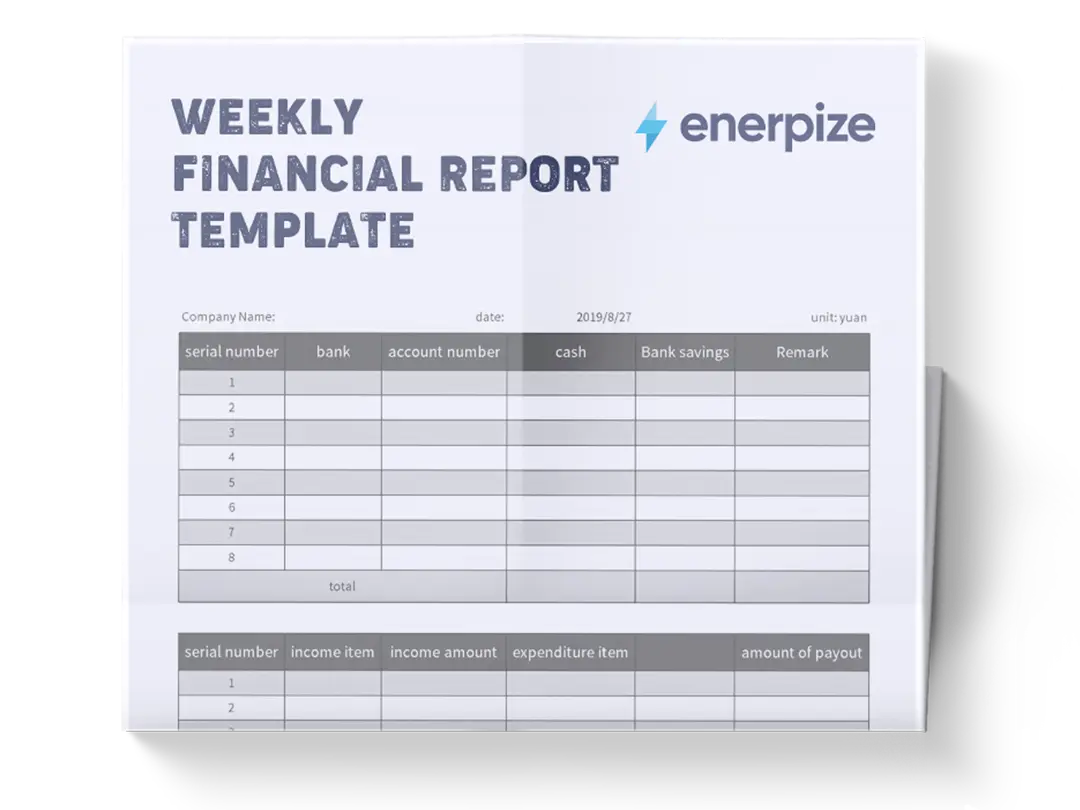
Weekly Financial Report Template Excel & Word
- The weekly financial report template is available in Excel, Word, Google Sheets, and Google Docs.
- It tracks opening balance, weekly cash movement, and ending cash position in one unified view.
- Compares this week vs last week across revenue, costs, profit, and cash flow to surface trends instantly.
- Ideal for founders, operators, finance teams, and managers who need fast, repeatable weekly financial visibility.


What is the Weekly Financial Report Template?
A Weekly Financial Report Template is a time-bound financial snapshot to show how money moved through a business over a single week and how that performance compares to the previous week. This template focuses on operational immediacy: opening cash position, weekly income, expenses, profitability, and closing cash balance are all presented side by side with week-over-week percentage changes.
The template enables teams to answer critical weekly questions: Did we make money this week? Where did cash increase or decline? Which costs are changing? And how does this week’s performance compare to last week's?
What Does the Weekly Financial Report Template Contain?
Opening Balance
Establishes the starting cash position for the week and serves as the baseline against which all weekly activity is measured.
- Opening Cash Balance: Shows the actual cash available at the beginning of the week, allowing users to contextualize revenue, expenses, and ending balance.
Metrics Summary
Provides a high-level performance overview by summarizing revenue, costs, profitability, and cash position for both the current and previous week.
- Revenue: Captures total income generated during the week, forming the top line for profitability and cash flow analysis.
- COGS: Records direct costs associated with producing goods or delivering services, enabling accurate gross profit calculation.
- Gross Profit: Represents revenue minus COGS, highlighting how efficiently the business generates value before operating expenses.
Operating Expenses
Aggregates all recurring business expenses required to run operations during the week.
- Net Profit: Shows the remaining profit after deducting operating expenses from gross profit.
- Cash on Hand: Reflects liquid cash available during the reporting period, reinforcing short-term financial health.
Expense Breakdown
Details operating expenses by category to reveal where money is being spent.
- Salaries & Wages: Tracks payroll-related costs incurred during the week.
- Marketing: Captures spending on promotional, advertising, and growth-related activities.
- Rent: Records fixed occupancy costs allocated to the week.
- Office: Accounts for office-related operational expenses.
- Other: Holds miscellaneous operating expenses not categorized elsewhere.
- Total Operating Expenses: Summarizes all expense categories into a single weekly operating cost figure.
Cash Flow
Focuses on actual cash movement rather than accounting profit.
- Inflow from Operations: Shows cash received from core business activities.
- Outflow (Operating Expenses): Represents cash paid out to sustain operations.
- Net Cash Flow (Operations): Calculates the difference between operational inflows and outflows.
- Other Inflow: Records non-operational cash received during the week.
- Other Outflow: Captures non-operational cash payments.
- Net Cash Flow for the Week: Shows total cash movement after accounting for all inflows and outflows.
- Cash on Hand / Ending Balance: Represents the final cash position at the end of the week.
How to Use the Weekly Financial Report Template
1- Start with the Opening Balance
Begin by entering the Opening Cash Balance for the current week. This figure should match the prior week’s ending balance, ensuring continuity between reporting periods.
2- Complete the Metrics Summary – This Week Column
Input this week’s Revenue, COGS, Operating Expenses, and resulting Net Profit. These figures form the core performance indicators used throughout the report.
3- Populate the Metrics Summary – Last Week Column
Enter the same metrics from the previous week to enable accurate comparison and percentage change calculations.
4- Review Percentage Change Columns
Use the % Change column to identify growth, decline, or stability across revenue, costs, and profit. These deltas guide attention to areas requiring action.
5- Detail the Expense Breakdown
Break down total operating expenses into Salaries & Wages, Marketing, Rent, Office, and Other categories. Ensure totals align with the Operating Expenses figure above.
6- Validate Total Operating Expenses
Confirm that the Total Operating Expenses row accurately sums all listed expense categories for both weeks.
7- Complete the Cash Flow Section
Enter cash inflows from operations, operating expense outflows, and calculate Net Cash Flow from Operations.
8- Add Other Cash Movements
Record any non-operational inflows or outflows to reflect full cash activity for the week.
9- Calculate Net Cash Flow for the Week
Combine operational and other cash movements to determine the total weekly cash change.
10- Confirm the Ending Balance
Ensure the Cash on Hand / Ending Balance reflects the opening balance plus net cash flow for the week.
Importance of the Weekly Financial Report Template
Establishes Weekly Financial Control
The template establishes a disciplined rhythm for weekly review of financial performance. By anchoring every report to an opening balance and closing with an ending cash position, this approach ensures consistency and prevents gaps between reporting periods.
This structure makes it immediately clear whether the business is generating cash, consuming it, or merely shifting money between categories. Over time, this cadence builds financial awareness across the organization and reduces reactive decision-making.
Turns Raw Numbers into Actionable Signals
The side-by-side comparison of “This Week” and “Last Week,” combined with percentage change calculations, transforms static figures into directional insights. Revenue growth, expense creep, or sudden swings in net profit are visible instantly.
This allows managers to spot abnormal changes early—before they become structural problems—and investigate their causes while the data is still fresh.
Strengthens Cash Flow Discipline
By separating operating inflows, operating outflows, and other cash movements, the template reinforces the distinction between profitability and liquidity. A business may appear profitable but still experience cash strain, and this report surfaces that risk weekly.
The clear link between net cash flow and ending balance supports better short-term planning, payment scheduling, and expense prioritization.
Improves Accountability Across Cost Centers
The expense breakdown section makes spending visible at a granular level. Tracking salaries, marketing, rent, office, and other expenses week over week discourages uncontrolled cost growth and encourages owners and managers to justify increases with operational outcomes.
Who Can Use the Weekly Financial Report Template?
Founders and Business Owners
For owners who need fast clarity without wading through full financial statements, this template provides a concise but comprehensive view of financial health. It answers critical questions—cash availability, weekly profitability, and expense behavior—without requiring accounting expertise or complex tools.
Operations and General Managers
Managers responsible for execution benefit from seeing how operational activity translates into financial results each week. The metrics summary and cash flow sections allow them to correlate decisions—such as staffing, marketing pushes, or cost controls—with measurable financial impact.
Finance and Accounting Teams
The template serves as a management-level reporting layer that complements formal accounting reports. It helps finance teams communicate performance trends to non-financial stakeholders in a clear, standardized format while maintaining data continuity.
Department Heads and Team Leads
Leaders overseeing budgets can use the expense breakdown to monitor their cost categories and understand how their spending affects overall profitability and cash flow. This encourages ownership and more informed decision-making.
Startups and Growing Businesses
Organizations in growth phases benefit most from weekly visibility. When revenue, expenses, and cash change rapidly, monthly reporting is often too slow. This template provides the structure needed to scale with financial discipline while remaining simple and repeatable.