

Posted on 25 December 2025
Performance Improvement Plan Template Word & Google Docs
- The performance improvement plan template is available in Word and Google Docs.
- It clarifies performance gaps, expectations, and improvement goals in a single structured document.
- Used for performance correction, employee development, and formal documentation of improvement efforts.
- Ideal for managers, HR teams, and organizations seeking a fair, transparent, and consistent approach to performance management.


What is the Performance Improvement Plan Template?
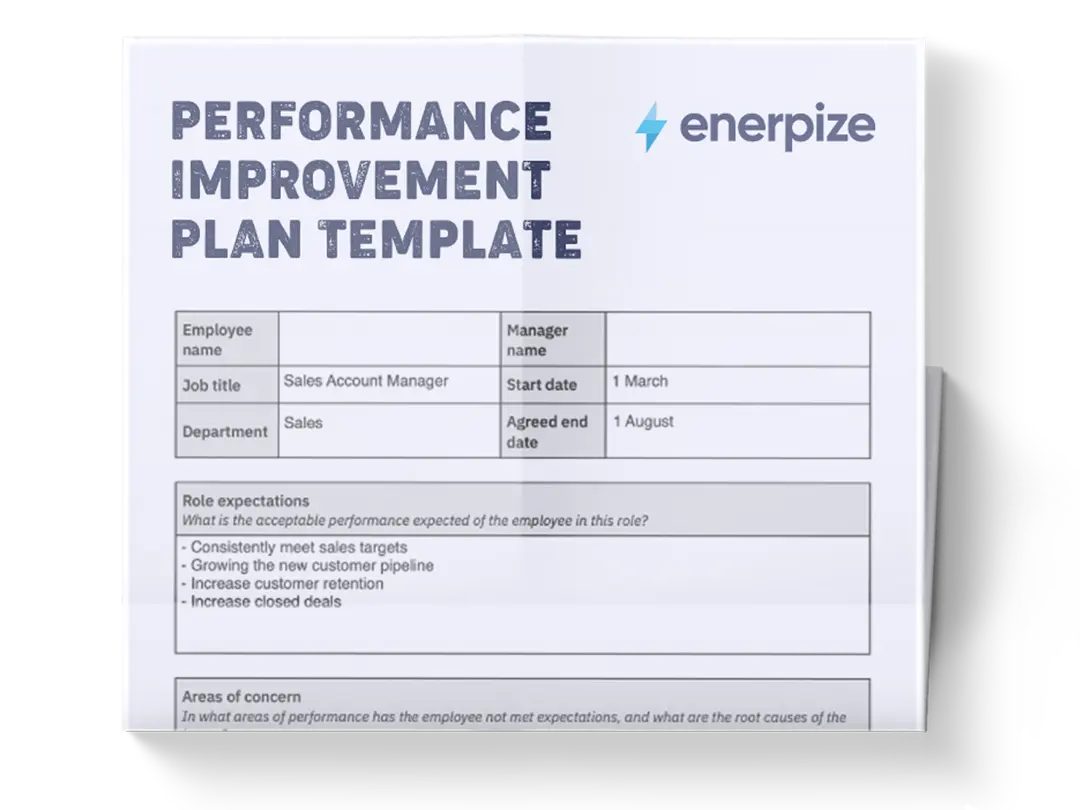
An employee performance improvement plan template (PIP) is used to address employee performance issues in a clear, objective, and actionable way. It provides a framework for documenting performance concerns, defining what acceptable performance looks like, setting measurable improvement goals, and outlining the support and resources the organization will provide during a fixed review period.
The PIP template is designed to create alignment between the employee and management by removing ambiguity, establishing accountability on both sides, and ensuring performance expectations are documented in writing.
What Does the Performance Improvement Plan Template Contain?
Employee Information
Captures core identification details such as employee name, job title, department, reporting manager, issue date of the PIP, and the defined review period. This section establishes ownership, accountability, and the plan's formal timeframe.
Purpose of This Plan
States the intent of the PIP, clarifying that the document exists to outline concerns, set improvement goals, and provide support within a defined period. This frames the plan as corrective and developmental rather than disciplinary.
Performance Concerns
Documents the specific areas where current performance does not meet expectations. It is structured around clearly defined areas of concern, factual descriptions of the issue, and the impact on work, ensuring concerns are objective and evidence-based.
Performance Expectations
Defines what acceptable performance will look like going forward. This section translates abstract expectations into explicit standards that the employee must meet.
Improvement Goals & Action Plan
Breaks down improvement into measurable goals, concrete action steps, clear measurement criteria, and deadlines. This transforms expectations into executable actions.
Support & Resources Provided
Outlines the assistance the organization will provide, including training, coaching, tools, resources, and structured manager check-ins. This section reinforces shared responsibility for improvement.
Review Schedule
Specifies the dates on which progress will be reviewed, including interim check-ins and a final review. This ensures ongoing monitoring rather than a single end-point evaluation.
Possible Outcomes
Clearly lists the potential outcomes at the end of the PIP period, ranging from successful improvement to plan extension or further disciplinary action. This establishes transparency around consequences.
Employee Comments (Optional)
Provides space for employees to document feedback, concerns, or contextual information, ensuring their perspective is formally documented.
Acknowledgment & Signatures
Includes signature fields for the employee, manager, and HR representative (if applicable), confirming that the plan has been discussed, understood, and formally acknowledged.
How to Use the Performance Improvement Plan Template
1- Complete Employee Information
Begin by filling in the employee’s name, job title, department, reporting manager, the date the PIP is issued, and the defined PIP review period. This establishes the plan's scope and timeline, ensuring there is no ambiguity about who it applies to or how long it will run.
2- Define the Purpose of the Plan
Review the purpose statement with the employee to ensure alignment. This step is critical for setting the tone of the discussion and clarifying that the objective is improvement within a structured timeframe.
3- Document Performance Concerns
Identify each area of concern separately. For every concern, clearly describe the issue and explain its impact on work outcomes, team performance, or business objectives. Ensure all entries are factual, specific, and objective, as this section forms the foundation of the entire plan.
4- Set Performance Expectations
Translate each concern into a corresponding expectation. Clearly define the standard that must be met going forward so the employee understands exactly what successful performance looks like.
5- Build the Improvement Goals & Action Plan
For each expectation, define a measurable goal. Break that goal down into specific action steps, clarify how success will be measured, and assign a deadline. This step connects expectations to execution and makes progress observable.
6- Outline Support & Resources
Document the training, coaching, tools, and managerial support that will be provided. This reinforces that improvement is a shared process and removes barriers that may hinder success.
7- Set the Review Schedule
Enter the dates for interim reviews and the final review. These checkpoints create structured opportunities to assess progress, provide feedback, and make adjustments if necessary.
8- Review Possible Outcomes
Discuss the listed outcomes with the employee to ensure they understand the implications of meeting or failing to meet the plan’s requirements. Transparency at this stage reduces misunderstandings later.
9- Capture Employee Comments
Allow the employee to add comments if they choose. This step ensures their voice is documented and can surface important context or concerns.
10- Acknowledge and Sign
Once all sections are complete and reviewed, obtain signatures from all required parties. This formalizes the plan and confirms mutual understanding.
Related Templates
Importance of Performance Improvement Plan Template
Establishes Clarity and Objectivity
The PIP template clarifies performance discussions by documenting concerns, expectations, and goals in writing. Instead of relying on informal feedback or subjective impressions, both parties operate from the same documented understanding of what needs to improve and why it matters. This objectivity is especially important in high-stakes or recurring performance conversations.
Creates a Fair and Consistent Process
Using a standardized template ensures performance issues are handled consistently across teams and departments. This consistency reduces the risk of favoritism, uneven treatment, or unclear expectations, and helps organizations demonstrate that performance management decisions are based on defined criteria rather than personal bias.
Supports Measurable Improvement
By linking goals to action steps, measurement criteria, and deadlines, the template turns improvement into a structured process. Progress can be reviewed at defined checkpoints, making it easier to identify what is working, where additional support is needed, and whether performance is genuinely improving.
Protects the Organization
The PIP template creates a clear record of identified issues, provides support, and reviews outcomes. This documentation is essential for HR governance and legal defensibility, particularly if the improvement plan leads to extended monitoring, disciplinary action, or termination.
Encourages Accountability on Both Sides
The template makes responsibilities explicit for both the employee and the organization. Employees are accountable for meeting defined standards, while managers and the company are accountable for providing the support, resources, and feedback outlined in the plan.
Who Can Use the Performance Improvement Plan Template?
Managers and Supervisors
Managers can use the template to structure difficult performance conversations, document expectations, and guide employees through a clear improvement process. The template helps managers move away from vague feedback and toward documented, goal-driven discussions that are easier to track and follow up on over time.
Human Resources Teams
HR professionals use the PIP template to ensure performance management actions are fair, compliant, and well-documented. The template supports internal policy enforcement by creating a clear paper trail of identified issues, provided support, review checkpoints, and final outcomes. This documentation is critical when advising managers, handling disputes, or assessing whether further action is appropriate.
Small and Medium-Sized Businesses
For organizations without formal performance management systems, the template provides an immediately usable framework. It allows SMBs to address underperformance professionally without building complex processes, ensuring expectations, timelines, and responsibilities are clearly defined from the start.
Large Enterprises
In larger organizations, the template supports consistency across departments and teams. It can be aligned with existing HR policies and used as a standardized document for managing performance improvement at scale, helping ensure equal treatment and documentation standards across the organization.