

Posted on 25 December 2025
Employee Verification Letter Template Word & PDF
- The employee verification letter template is available in Word, PDF, and Google Docs.
- It confirms employment status, job title, department, and work details in a structured format.
- Used for loan applications, immigration, background checks, and employment verification.
- Ideal for HR teams, managers, and organizations seeking a consistent and professional verification process.


What is the Employee Verification Letter Template?
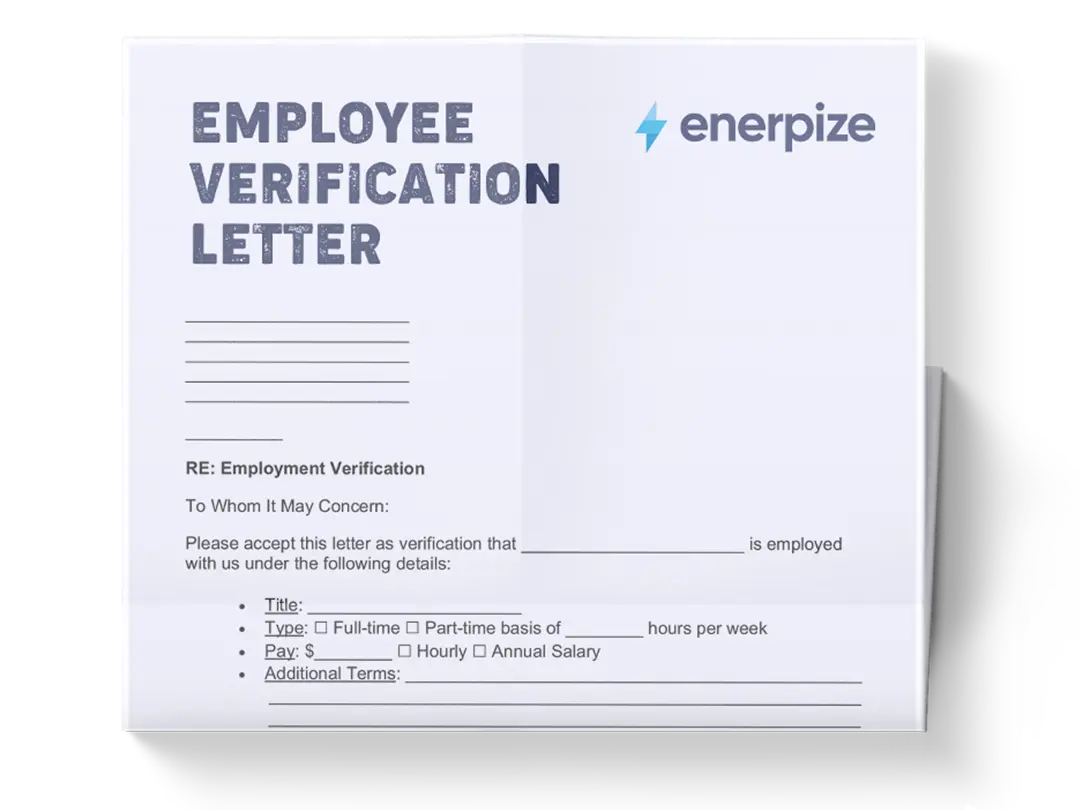
An Employee Verification Letter Template is used to confirm an individual's employment with a specific organization. It provides a structured framework for HR or management to communicate key employment details, including job title, department, employment status, start date, and optional salary or work schedule information.
This template ensures that verification requests are handled efficiently, consistently, and with appropriate professionalism.
What Does the Employee Verification Letter Template Contain?
Company Information
Includes company name, address, phone number, email, and website. This ensures the recipient can confirm the organization’s authenticity and contact the company if necessary.
Date
Specifies when the letter is issued. The date provides context and validity for the verification, showing the employment information is current.
Recipient Information / Salutation
The letter is addressed “To Whom It May Concern,” creating a general yet professional opening suitable for multiple verification purposes.
Employee Details
Lists key employment information: full name, job title, department (if applicable), employment status (full-time, part-time, or contract), employment start date, and current employment status (active/on leave). These fields provide recipients with a clear understanding of the employee’s role and status within the organization.
Optional Information
Additional fields such as monthly/annual salary and work schedule (e.g., 40 hours per week) can be included if requested. This allows the template to be flexible and tailored to specific verification needs.
Purpose Statement
A statement clarifying that the letter is issued at the employee’s request for verification purposes only. It sets expectations about the scope of information and prevents unauthorized assumptions.
Closing Statement / Contact Details
Indicates that further confirmation can be obtained via the provided company contact information. This maintains professional communication channels.
Authorized Signatory
Fields for the name, job title, signature, and company stamp (if applicable) of the authorized signatory. This formalizes the verification and adds authenticity.
How to Use the Employee Verification Letter Template
1- Fill in Company Information
Add the official company name, address, contact number, email, and website. Ensure the details are up to date and accurate to maintain professionalism and credibility.
2- Enter the Date
Provide the date the letter is issued. This confirms the validity and relevance of the employment information.
3- Add Recipient Information / Salutation
Use a general salutation such as “To Whom It May Concern,” unless a specific recipient is provided. This ensures the letter can serve multiple purposes without needing further customization.
4- Complete Employee Details
Enter the employee’s full name, job title, department, employment status, employment start date, and current employment status. Accuracy is critical to ensure the verification is reliable and professional.
5- Include Optional Details (if required)
Add additional information, such as salary or work schedule, only if requested or necessary. Avoid including any details not explicitly authorized to maintain confidentiality.
6- State the Purpose
Clearly include that the letter is issued for verification purposes only. This limits liability and clarifies that no additional assumptions should be made based on the content.
7- Provide Contact Information
Ensure that recipients know how to contact the company for further confirmation. This maintains transparency and supports trust.
8- Sign and Authenticate
The authorized signatory should complete the name, job title, signature, and affix a company stamp if applicable. This validates the letter and confirms the information is formally authorized.
Related Templates
Performance Improvement Plan Template
Time Off Request Form Template
Employee Evaluation Form Template
Employment Separation Agreement Template
Employee Verification Letter Template
Employee Exit Interview Template
Importance of Employee Verification Letter Template
Establishes Employment Credibility
A standardized Employee Verification Letter ensures that employment details are communicated accurately and professionally. By confirming the employee’s job title, department, employment status, and start date, the organization demonstrates trustworthiness and consistency. Recipients such as banks, landlords, immigration authorities, and potential employers can rely on the information without needing additional verification, reducing delays and misunderstandings.
Ensures Consistency Across Verifications
Using a pre-formatted template allows HR teams to provide consistent responses for every verification request. Without a template, letters may vary in wording, detail, or tone, which could create confusion or raise questions about authenticity. The template standardizes language and formatting and includes optional details such as salary and work schedule, ensuring all verifications adhere to the same professional standards.
Supports HR Efficiency
The template saves HR professionals time by providing a ready-to-use framework. Instead of drafting each verification letter from scratch, HR staff can quickly fill in employee-specific information, reducing administrative overhead while maintaining accuracy. This efficiency is particularly valuable in organizations handling large volumes of verification requests.
Protects Confidentiality and Limits Liability
By clearly defining what information is included, the template protects sensitive employee data. Only verified, necessary details are disclosed, minimizing the risk of sharing salary, work schedules, or personal information without authorization. It also limits liability by clearly stating that no assumptions should be made beyond the details included.
Supports Legal Compliance and Standardized Recordkeeping
Certain institutions, including government agencies and financial institutions, require formal proof of employment. A standardized verification letter ensures the company meets these legal and administrative requirements. Additionally, retaining copies of issued letters helps organizations track requests and maintain accurate records for auditing or internal review.
Promotes Employee Trust and Professionalism
Employees requesting verification letters gain confidence knowing that their employment details are accurately and consistently represented. This fosters trust in HR and management and reinforces the company’s professional image in external interactions.
Who Can Use the Employee Verification Letter Template?
HR Professionals
Human Resources teams are the primary users, leveraging the template to provide timely and accurate employment confirmations. HR can ensure letters comply with company policy and legal requirements while reducing inconsistencies or errors that could arise from ad hoc letter drafting.
Managers and Supervisors
Supervisors can use the template to verify employment details for their team members. For example, a manager may be asked to confirm an employee’s job title, start date, or current status for a background check, loan application, or visa process. Using the template ensures managers provide precise and consistent information.
Small and Medium Enterprises (SMEs)
Smaller organizations without dedicated HR teams benefit from a ready-made template that eliminates the need to create verification letters from scratch. The template allows SMEs to maintain professional standards in employment verification, even with limited administrative resources.
Large Enterprises and Multi-Location Organizations
In large organizations, the template ensures consistency across departments and locations. By standardizing the verification process, it reduces variation in letter format, language, and information disclosure, ensuring all verification letters meet the company’s policy and professional standards.
Employees Themselves
Employees can leverage the template to formally request verification letters from their employer. By providing a clear framework, the template helps employees know what information will be included, ensuring transparency and alignment between the employee and HR.
External Stakeholders
Financial institutions, landlords, immigration authorities, or any entity requiring employment confirmation indirectly benefit from the template. It ensures they receive structured, reliable, and professional documentation that meets their verification needs efficiently.
Legal and Compliance Teams
Organizations can also involve legal or compliance teams to review and approve the template. This ensures the letter aligns with labor laws, confidentiality requirements, and organizational policy, minimizing risk in the event of disputes or audits.